
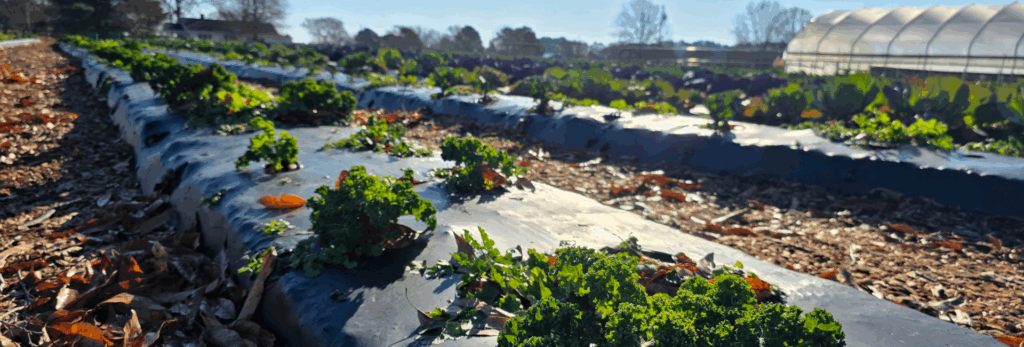
At Inter-Faith Food Shuttle, we believe in the value of resilient and community-centered gardening. Winter may seem like the quietest season in the garden, but it is one of the most important times for building soil health, planning spring, and growing hardy crops that thrive in the cold.
Here’s a guide to maintaining and enjoying your garden this winter.
Soil Health in Winter
Healthy soil is the foundation of every season’s success, and winter is an ideal time to invest in long-term soil improvement. Cold temperatures slow plant growth but do not stop natural soil-building processes, especially when gardeners protect and enrich the soil.
Mulching to Protect Soil
Adding a thick layer of organic mulch, leaves, pine straw, wood chips, straw, or compost, helps:
- Insulate soils and root systems
- Prevent erosion during winter rains
- Reduce nutrient loss
- Support beneficial soil organisms
Organic matter improves soil structure and water-holding capacity, both of which are essential during winter’s freeze–thaw cycles.
Winter Cover Crops
If beds are not being used for winter vegetables, cover crops like clover, rye, vetch, or winter wheat provide natural protection and soil regeneration.
Benefits include:
- Adding organic matter
- Preventing erosion
- Feeding soil microbes
- Increasing long-term fertility
Cover crops, even on a small scale, significantly improve soil health.
For gardeners planning to terminate cover crops before spring planting, winter is also the time to observe plant maturity, root density, and soil moisture to determine the best strategy for mulching, mowing, or crimping in early spring.
Planning & Planting for Winter
Winter gardening in North Carolina focuses on cold-hardy vegetables, protection strategies, and early planning for spring.
What You Can Grow Now
Many cool-season crops planted in the fall will continue to produce through winter, especially when protected. These include:
- Kale
- Collards
- Turnip greens
- Carrots
- Spinach
- Swiss chard
- Mustards
According to NC State’s planting guidelines, these crops tolerate freezing temperatures and can overwinter successfully.
Season Extension Tools
Even in zone 8a, frosts occur regularly in winter. Simple season-extension tools help keep crops productive:
- Row covers or frost cloth for leafy greens
- Cold frames for tender seedlings or winter lettuce
- Low tunnels to shelter root crops and brassicas
These structures create warmer microclimates that can extend your growing window by several weeks.
Planning Ahead for Spring
Winter is the perfect time to:
- Review last year’s garden successes and challenges
- Map out crop rotation to reduce disease and pest buildup
- Order seeds suited for NC’s climate
- Start seeds indoors for early spring planting
- Test soil pH and nutrients
Crop rotation breaks pest and disease cycles and improves long-term soil health. If starting seeds indoors, follow guidance on proper media, sterilizing containers, and germination requirements to avoid damping-off and weak seedlings.
Winter Garden Care & Maintenance
Even when the garden seems dormant, small maintenance actions make a big difference.
Watering
Plants need less water in winter, but not zero. Water during prolonged dry periods or before hard freezes to protect roots.
Mulching and Weeding
Mulch suppresses winter weeds and protects soil life. Keep beds tidy but avoid disturbing soil unnecessarily, which disrupts microbial activity.
Pest Monitoring
Winter reduces many insect pressures, but some pests overwinter in plant debris. Remove diseased leaves and stems but compost healthy organic matter.
Tool and Infrastructure Care
This is an ideal time to:
- Clean and sharpen tools
- Repair raised beds or irrigation lines
- Sanitize seed-starting trays
- Plan improvements for spring
NC State emphasizes sterilization of containers and tools to prevent soil-borne pathogens from carrying over into the next season.
Harvest & Winter Storage
Winter harvests rely on timing and protection. Many crops increase in sweetness after frost and store well both in-ground and after harvest.
Crops That Store in the Soil
- Carrots
- Beets
- Turnips
- Radishes
They can remain in the ground and be harvested as needed until deep freezing occurs.
Leafy Greens
Pick outer leaves regularly to encourage slow but steady regrowth.
Indoor Storage Methods
- Root crops: store in a cool, moist place (such as a garage or cellar)
- Greens: wash, dry, and refrigerate
- Herbs: freeze or dry for winter use
For gardeners growing indoors or in protected spaces, propagation techniques such as taking cuttings, dividing perennials, or starting seeds can extend your harvest and prepare for spring planting.
Winter Gardening Builds Community & Resilience
Winter may seem like a pause, but in the garden, it’s a season of preparation, reflection, and shared learning.
Inter-Faith Food Shuttle’s education programs, school partnerships, and volunteer opportunities continue year-round, because gardening is more than growing food. It nurtures resilience, connection, and the knowledge that healthy communities grow from the ground up.
Resources
We invite you to explore the quiet joys of winter gardening with us.